
What Is Qi? Understanding the Foundation of Traditional Chinese Medicine
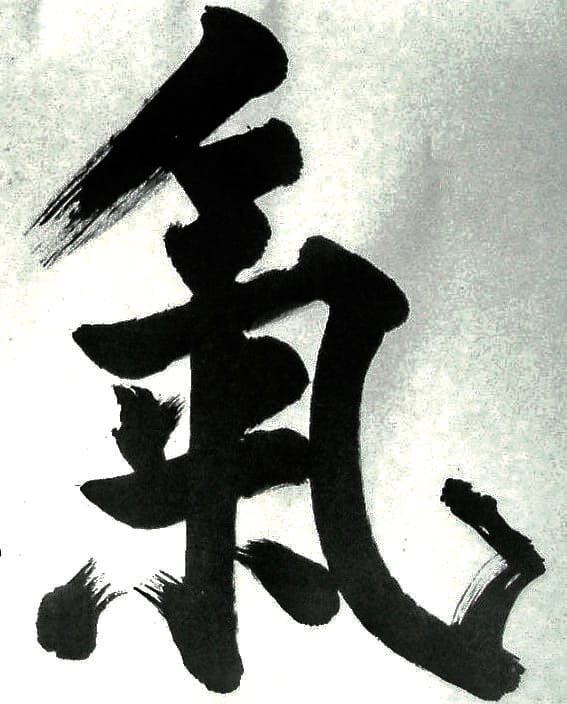
In Traditional Chinese Medicine (TCM), few concepts are as central – or as elusive – as Qi. Often not quite accurately translated as “vital energy” or “life force”, Qi is more complex than that, and has no western equal or adequate translation.
Qi is considered the fundamental substance and driving force behind all physiological and psychological processes in the human body. For students exploring the foundations of TCM, understanding Qi is essential to grasping how health, disease, and treatment are conceptualised in this ancient yet growing medical tradition.
The Nature of Qi
In Chinese philosophy, Qi is not a metaphor but a literal, dynamic force that permeates everything in the universe. It is the basic material of existence, simultaneously physical and energetic. Chinese thought does not distinguish radically between matter and energy. Everything in the Universe is Qi. Everything that is, is Qi.
Qi is present in all living beings and natural phenomena. The Chinese cosmological framework of Yin and Yang and the Five Phases (Wood, Fire, Earth, Metal, Water) are all expressions of Qi in different states and transformations. When Qi flows harmoniously, life flourishes; when it is blocked, deficient, or excessive, imbalance and illness arise.
Qi in the Human Body
According to TCM theory, the human body is a complex system of Qi circulation. Qi moves through a network of pathways known as the jingluo, connecting all parts of the person and maintaining balance. This network ensures that every part of the body receives nourishment, warmth and vitality.
TCM identifies several types of Qi, each with distinct functions, within the body. Understanding these distinct functions is central to diagnosis and treatment.
Qi in Practice
TCM therapies such as Acupuncture, Herbal medicine and Medical Qigong are all designed to work on the Qi. Acupuncture connects with the Qi via specific Acupuncture points along the Jingluo. While herbal formulas tonify or disperse Qi depending on the condition. Qigong allows practitioners to cultivate and harmonise their own Qi directly and can also be used in Medical Qigong which allows the direct transfer of Qi from practitioner to client without any intermediaries.
The Philosophical Dimension
Beyond medicine, Qi is a cornerstone of Chinese philosophy. It bridges the physical and spiritual, providing a unified explanation for life, consciousness, and the cosmos. In this view, human beings are microcosms of the universe – expressions of the same Qi that animates all of nature.
Experiencing Qi
Practitioners and students of Acupuncture TCM will experience the movement of Qi when learning how to do Acupuncture, and many people who receive Acupuncture treatments will experience this too.
Even those with no training in TCM can usually experience what Qi can feel like if they attend one of the Qigong for Health workshops which are run at the ICTCM. The next one is being held on 18th and 19th July and a booking form is now available.
Conclusion
For students of TCM, understanding Qi is to understand life itself. It is both the foundation of health and the thread connecting body, mind, and environment. While modern science may use a different language, the TCM concept of Qi remains a profound and integrative way of seeing how this Vital substance moves through all things.